Published July 20, 2026 in Meshub.ai
DeepSeek vs ChatGPT: How to Compare Two AI Models for Real Work

Share



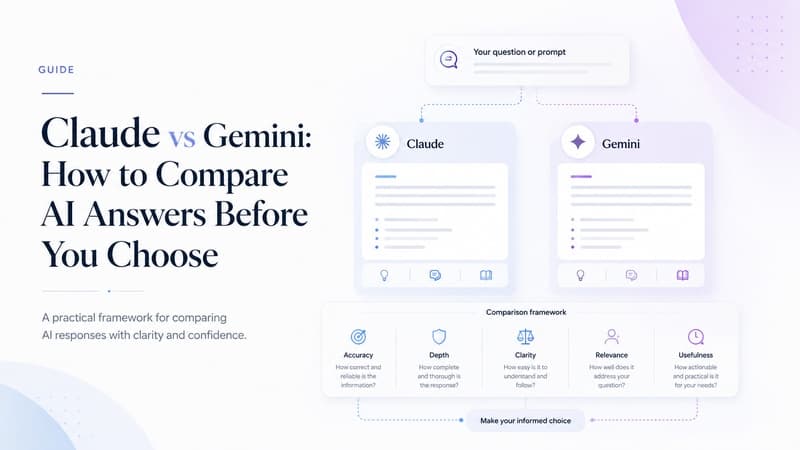
A useful DeepSeek vs ChatGPT comparison is less about declaring one model the universal winner and more about testing the work you actually need to finish. The same prompt can produce different trade-offs in structure, detail, reasoning, tone, and review effort. A repeatable test makes those differences visible.
DeepSeek and ChatGPT can both be useful in a multi-model AI workflow, depending on the task, context, and constraints. Instead of relying on a single impressive answer, compare them with the same brief, the same source material, and a clear scoring rubric. That approach is more reliable for research, writing, planning, and coding than a casual trial of unrelated prompts.
DeepSeek vs ChatGPT: What Should You Compare?
Start with the job, not the brand. A model comparison is meaningful only when both systems receive comparable inputs and are judged against the same outcome. Define the deliverable, audience, source boundary, acceptable uncertainty, and format before you open either assistant.
For example, “write something about onboarding” is too vague. “Create a 700-word onboarding outline for a small software team, using only the supplied product notes, with assumptions labeled” creates a test that can be repeated. You can then compare answer quality rather than comparing two different interpretations of an underspecified request.
| Evaluation area | Question to ask | What to watch for |
|---|---|---|
| Instruction following | Did the response respect the requested scope, format, and audience? | Helpful-sounding additions that violate the brief. |
| Evidence handling | Does it separate supplied facts from assumptions or suggestions? | Confident details that are not in the source material. |
| Completeness | Does it cover the parts needed for the decision? | Polished prose that skips constraints or edge cases. |
| Clarity | Can another person understand and reuse the answer? | Vague recommendations or unexplained jargon. |
| Review effort | How much editing and verification is required? | An answer that looks fast but creates downstream work. |
How to Run a Fair DeepSeek vs ChatGPT Test
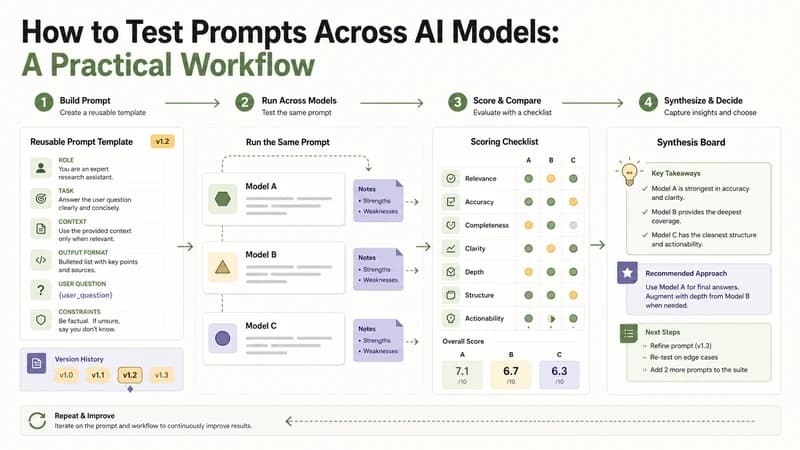
1. Choose two or three representative tasks
Pick tasks from your real workflow: a research synthesis, a structured draft, a difficult explanation, a coding plan, or a revision. One prompt is not enough to support a broad conclusion. A small task set reveals whether a preference is stable or simply caused by one lucky answer.
2. Lock the prompt and context
Copy the same instructions into both tools. Keep the source packet, output length, tone, exclusions, and requested format identical. If a tool requires a different input format, record that difference rather than pretending the test is perfectly symmetrical.
A strong comparison prompt can say: “Use only the notes below. Separate supported facts, interpretations, and open questions. Give a concise recommendation, list risks, and mark every claim that needs verification.” This lets you inspect how each model handles uncertainty, not only how fluent the writing sounds.
3. Compare outputs side by side
Review the responses against the rubric before deciding which one feels better. Look for omitted requirements, unsupported claims, hidden assumptions, useful alternatives, and the amount of work needed to edit the result. If one response is more detailed, ask whether the detail is relevant or merely creates more material to check.
4. Add a second prompt that tests transfer
Follow the first task with a related revision: turn the research into an executive summary, convert a plan into a checklist, or ask for tests for a proposed implementation. This tests whether the output can move into the next stage of your workflow. Model choice should reflect the full chain from question to reviewed deliverable.
5. Verify before you generalize
Do not turn one session into a permanent ranking. Repeat the test on another day or with another representative task. Model behavior can vary with prompt wording, context length, tool settings, and the type of question. The practical result may be a routing rule—use one model for a class of tasks and the other for a different class—rather than a single winner.
Where the Results May Differ
Users may notice differences in how DeepSeek and ChatGPT organize a response, explain a concept, handle a long instruction, or propose next steps. Those differences are not fixed promises about every version or every task. Treat them as observations from your test, and keep the test date and prompt with the result.
For writing, compare whether the model preserves the brief and gives material that is easy to edit. For research, compare source boundaries, uncertainty labels, and open questions. For coding, compare the clarity of the plan, edge-case coverage, test suggestions, and whether the code can be reviewed by someone who did not write the prompt.
A second model is especially useful when the first response contains an important assumption or when the cost of a missed detail is high. It is not a substitute for primary sources, software tests, or professional judgment. For a broader framework, see AI answer reliability and learn how to make disagreements visible before using an answer.
When Should You Use Both Models?
Using both models makes sense when you are exploring an unfamiliar problem, reviewing a consequential draft, testing a prompt, or looking for blind spots. Send the same task to both, compare their reasoning and omissions, then ask a human reviewer to resolve the points that matter.
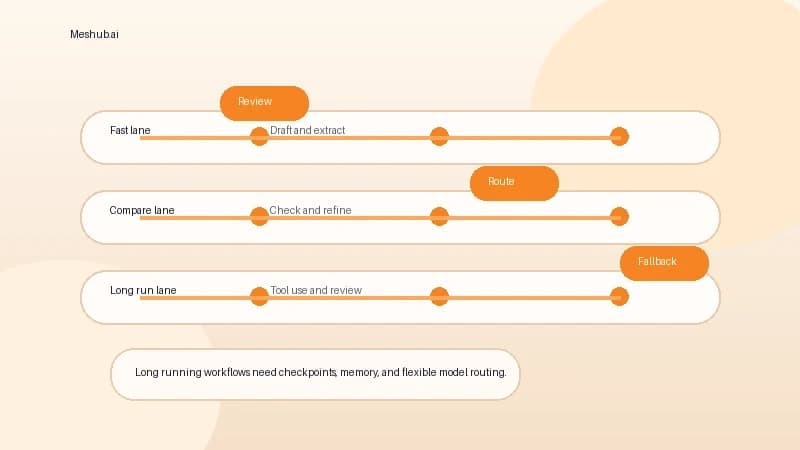
Using one model may be more efficient for routine transformations with a stable format. The goal of comparison is not to maximize the number of chats. It is to reduce uncertainty and improve the repeatable workflow. A multi-model AI workspace can be useful when you want the prompt, answers, and review criteria in one place.
How Meshub.ai Helps
Meshub.ai helps users discover AI tools and think in terms of practical multi-model workflows. That is useful for a DeepSeek vs ChatGPT comparison because the decision is usually connected to a job: research, writing, coding, planning, or review. Start with a representative task, compare outputs with a rubric, and keep the setup that makes repeated work easier to inspect.
You can also use Meshub.ai as a place to explore related tool categories and comparison ideas before running your own test. Keep the evaluation neutral, record what you observed, and revisit the rule when your task or model access changes.
FAQ
Which is better, DeepSeek or ChatGPT?
There is no universal answer. The better fit depends on your task, context, output requirements, review standard, and the version or access available to you. Test representative work instead of relying on a generic ranking.
How can I compare DeepSeek and ChatGPT fairly?
Use the same prompt, source material, output format, and evaluation rubric. Compare instruction following, evidence handling, completeness, clarity, and review effort across more than one realistic task.
Should I send the same prompt to both models?
Yes, when the goal is a controlled comparison. If the tools require different input formats, document the difference and avoid treating the result as a perfectly controlled experiment.
Does using two AI models guarantee a more accurate answer?
No. Agreement can still reflect a shared omission, and disagreement does not identify the truth by itself. Verify important claims against appropriate sources, tests, or qualified review.
What should I compare for AI coding tasks?
Compare the implementation plan, assumptions, edge cases, test suggestions, maintainability, and the effort needed for a human to review and adapt the code.