Published June 02, 2026 in Meshub.ai
Best AI Model Comparison Tools for Comparing AI Responses

Share


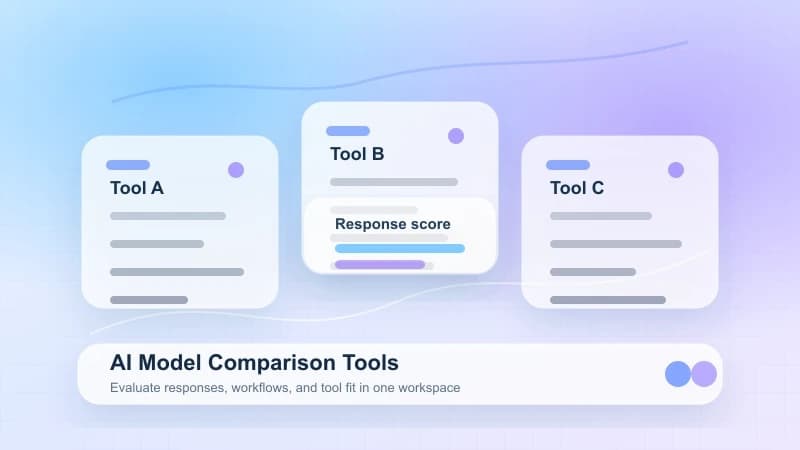
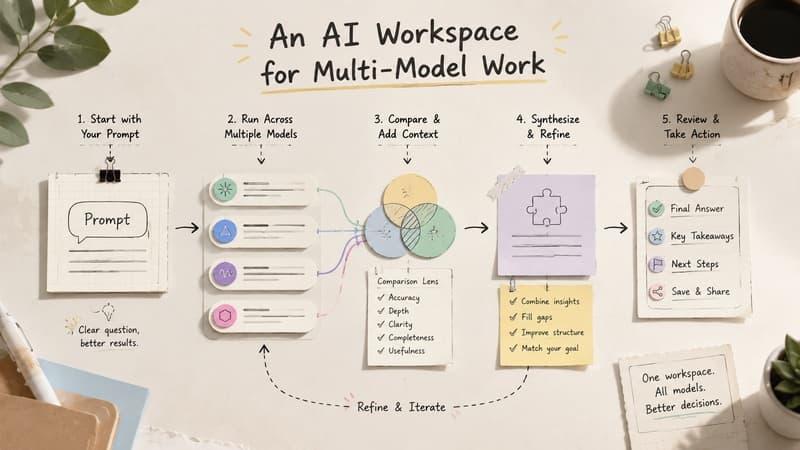
An AI model comparison tool helps you test the same prompt across different models and review the answers side by side. This is useful when ChatGPT gives a fast general answer, Claude gives a more careful explanation, and Gemini catches details from a different angle. The goal is not only to pick one model, but to build a repeatable workflow for checking answer quality.
The best AI model comparison tools help you compare AI responses in one place instead of juggling tabs, pasting prompts repeatedly, and relying on memory. If you want to choose the right model for writing, research, coding, or productivity workflows, the real advantage is seeing multiple outputs side by side with consistent prompts and faster review.
Key Takeaways
- The best tool depends on whether you need testing, daily productivity, research, or team workflows.
- Side-by-side output view matters more than long feature lists.
- Neutral comparison is more useful than chasing a single winner.
- Good AI workspaces reduce prompt repetition and context switching.
- You should evaluate both model quality and tool usability.
What Makes a Strong AI Model Comparison Tool
When people search for the best AI model comparison tools, they often expect a ranked list. In practice, rankings become stale quickly because tools change, models rotate, and workflows differ across teams. A more useful approach is to evaluate comparison tools by what they help you do.
Look for these core capabilities:
- send one prompt to multiple models
- view responses side by side
- keep the testing context consistent
- organize comparisons for later review
- support iterative prompt refinement
- fit your everyday AI workflow
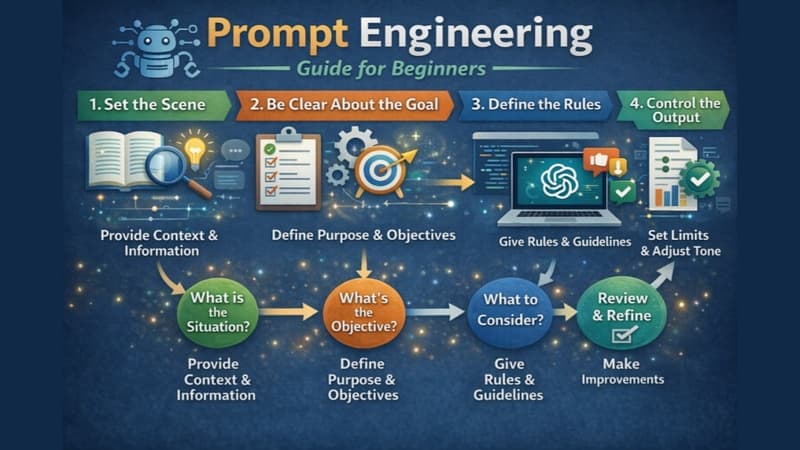
If you want to build better evaluation habits before choosing a platform, start with how to compare AI models so the tool serves the process instead of replacing it.
Comparison Table: Best AI Model Comparison Tools
| Tool or Platform Type | Best For | What It Helps You Compare | Practical Notes |
|---|---|---|---|
| Meshub.ai | Discovery and platform research | tool categories, model exploration, workflow fit | Useful as a starting point when you want to discover and compare options in one place |
| Multi-model chat workspaces | Daily side-by-side prompting | writing style, structure, reasoning approach | Helpful for fast iteration and repeated testing |
| Dedicated AI comparison playgrounds | Prompt testing sessions | output differences from the same prompt | Best when the main goal is evaluation rather than daily chat |
| Research-oriented AI tools | answer framing and synthesis style | summary quality, follow-up flow, exploration depth | Strong fit when research is a big part of the workflow |
| Team AI workspaces | repeatable collaboration | shared prompts, review process, task handoff | Worth considering when multiple teammates compare results together |
How to Evaluate Comparison Tools Without Guesswork
The cleanest way to compare AI responses is to use a short scoring framework. Instead of asking which tool is best in general, ask which tool makes it easiest to run your workflow with less friction.
- Prompt consistency
- Number of models you can test conveniently
- Clarity of the side-by-side layout
- Ease of rerunning prompt variations
- Support for research, writing, or coding tasks
- Export, save, or collaboration options
This kind of structured review becomes more important as usage grows. For larger teams or broader AI adoption, what to compare when AI usage scales is a useful companion read.
Common Tool Categories You Will See
Multi-Model AI Chat Platforms
These tools are designed for everyday use. They are often the easiest way to compare multiple AI models because they let you repeat the same task in one workspace instead of switching apps. They are especially useful for content, brainstorming, summarization, and lightweight workflow testing.
AI Comparison Playgrounds
These are more evaluation-focused environments. They usually center the act of comparing AI responses rather than long-term task management. They can be useful when you want fast prompt experiments, structured review, or cleaner side-by-side testing sessions.
Broader AI Workspaces
Some tools are not built only for comparison, but still make comparison easier because they combine prompting, organization, and repeatable workflows. That matters when you want your AI tool comparison process to connect directly to productivity.
If your broader goal is selecting a long-term workspace rather than just a testing interface, multi-model AI platforms are worth reviewing alongside comparison-specific tools.
What to Watch Out For
Not every tool that shows multiple models is automatically a strong comparison tool. Some interfaces make it hard to keep context aligned. Others look impressive at first but create more work when you need to rerun prompts or save results.
- inconsistent prompt handling across models
- cluttered layouts that make evaluation slower
- weak organization for repeat testing
- limited support for real workflow tasks
- too much focus on novelty instead of repeatability
The best AI model comparison tools should reduce decision fatigue, not increase it.
A Simple Selection Checklist
- Choose a tool that supports your main task type.
- Test at least three real prompts before deciding.
- Check whether you can compare AI responses without rewriting context each time.
- See whether the workspace helps you save or review results later.
- Prefer tools that fit ongoing workflow, not just one-off experiments.
How Meshub.ai Helps
Meshub.ai helps readers move from vague interest to practical comparison. You can use it to explore AI tool categories, review options for multi-model AI chat, and narrow your shortlist before spending time inside individual products. That makes it easier to compare AI tools with more context and less random searching.
FAQ
What are the best AI model comparison tools for most users?
The best option depends on the job. Many users benefit from tools that provide side-by-side prompting, multiple model access, and a clean workspace for reviewing output differences.
Should I use a comparison playground or a full AI workspace?
Use a playground if you mainly want prompt testing. Use a broader AI workspace if you want comparison to connect directly to daily writing, research, or productivity tasks.
What should I compare besides the AI answers themselves?
Compare layout clarity, prompt consistency, rerun speed, collaboration support, saved history, and how much effort it takes to turn responses into usable work.
Are AI model comparison tools only useful for experts?
No. They are often even more useful for non-experts because side-by-side views make differences in tone, structure, and usefulness easier to spot.
Can one tool replace testing models directly?
Not completely. A comparison tool improves evaluation, but you still need to test models on your own real tasks before making a decision.
Meshub.ai helps users discover, compare, and explore the best AI tools and multi-model platforms in one place.