Published May 07, 2026 in Meshub.ai
How to Build Voice Ready AI Workflows

Share



Key Takeaways
- Voice AI now depends on workflow design, not only on a speech model that sounds natural.
- The recent low latency and security signals show that voice systems need routing discipline, session control, and earlier review.
- Teams should design voice workflows as short loops with clear handoffs between live interaction and slower follow up work.
Voice AI is easy to admire in a demo and easy to mishandle in real work.
Two updates in the current window explain why. On 2026-04-30, OpenAI introduced stronger account protection for ChatGPT and the API. On 2026-05-04, OpenAI explained how low latency voice AI at scale depends on global routing, stable ownership of session state, and a smaller exposed network surface.
The practical lesson is simple. Voice becomes useful only when the workflow around it is stable.
Start With One Short Interaction Loop
Teams often try to make voice AI do too much too early. That creates brittle behavior because the system is forced to listen, reason, act, and remember without enough boundaries.
A better starting point is one short loop:
- listen
- confirm intent
- answer or route
- log the result
- hand off anything longer to an async step
This keeps the live interaction focused on speed and clarity. It also makes it easier to compare multiple tools inside Meshub.ai without confusing instant voice behavior with broader workflow quality.
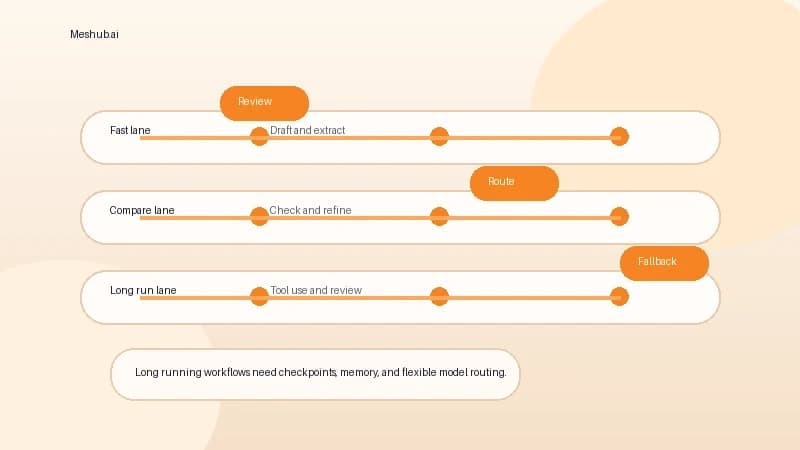
Separate The Live Lane From The Async Lane
Voice workflows get messy when every task stays in the same lane.
The live lane should handle:
- short questions
- confirmations
- navigation help
- fast summaries
The async lane should handle:
- long analysis
- document generation
- multi file review
- anything that needs approval
This split matters because low latency requirements are different from high quality synthesis requirements. The best live voice model is not always the best model for the follow up task.
That is one reason multi model comparison matters. A team can use one model for fast interaction and another for heavier reasoning, as long as the handoff stays visible and easy to review.
Keep The Latency Budget Small
Users notice delay immediately in voice systems. Even a technically strong model feels weak if the interaction rhythm breaks.
That means the workflow should minimize unnecessary work in the live turn:
- do not fetch too much context before the first reply
- ask one clarification question instead of five
- keep tool calls narrow
- avoid long generation in the live lane
- move deep synthesis into the async lane
The recent engineering signal around routing and smaller network surface is useful because it shows where complexity should live. The thin routing layer can be complex. The user interaction should not feel complex.
Add Review Before High Stakes Actions
Voice interfaces can make weak decisions sound confident. That is why review needs to happen before the workflow acts on anything sensitive.
Add a checkpoint before:
- sending a message
- changing structured data
- triggering an external workflow
- summarizing a long conversation into a permanent record
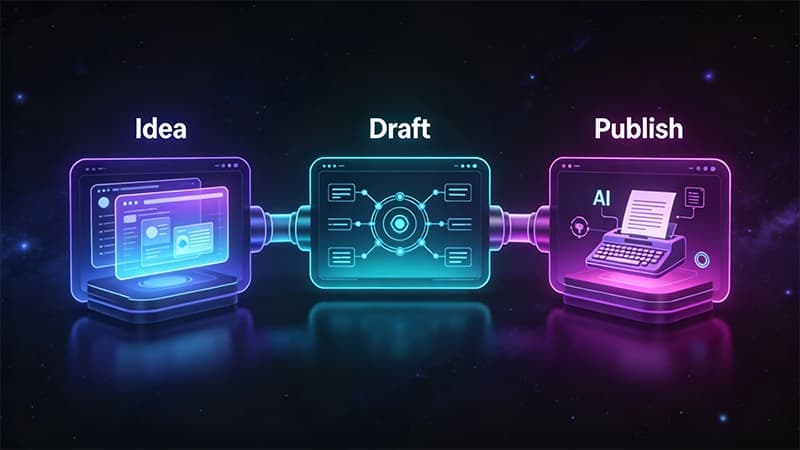
This is the same logic behind AI Content Creation Workflow: Idea to Draft to Publish. The best AI systems do not skip review. They place review where it changes the outcome earliest.
Treat Session Continuity As A Security Problem
Voice feels conversational, so teams often become too casual about session state. That is a mistake.
Session continuity should keep only what improves the next step:
- current goal
- approved preferences
- active task state
- recent facts that still matter
It should avoid keeping noisy or unnecessary residue. The April 30 security signal matters because accounts are becoming containers for more connected context. The more central the AI account becomes, the more carefully teams should treat access, recovery, and session visibility.
If your team is still deciding which models belong in which step, How to Choose the Best AI Model remains a practical baseline.
Build The Handoff Before You Scale
Most voice workflow failures come from weak handoffs, not weak speech recognition.
Before you scale usage, answer these questions:
- where does the live session end
- what moves into async follow up
- which step always needs a human
- which model handles the second step
- how does the user review what happened
Once those answers are stable, it becomes much easier to compare tools, preserve continuity, and improve the sequence over time.
Bottom Line
Voice ready AI workflows are built from routing discipline, fast interaction loops, and careful session control. The newest latency and security signals both point in the same direction: voice becomes useful when the workflow around it is designed on purpose.
FAQ
What is a voice ready AI workflow
It is a workflow where voice is the fast input surface, but routing, review, and follow up are designed as clear steps.
Why should voice and async work be separated
Because low latency interaction and high quality synthesis reward different models and different process rules.
Where should review happen in voice workflows
Review should happen before any high stakes external action, permanent record, or sensitive update.
How does Meshub.ai help with voice workflow design
Meshub.ai helps users compare AI tools and models in one place so they can test which options fit the live lane and the async lane best.
Meshub.ai helps users discover, compare, and explore the best AI tools and multi-model platforms in one place.